A simple tracker for your class. Practice Statements down the left, ten student-name spaces across the top, and blank cells to use your way.
Choose a strand below. Write in the names, then add your own ticks, dates, codes or notes. For a class of 25, print three copies of the tracker.
46 Practice Statements · 3 strands · PDF and Google Sheets · No TeacherGPT signup needed
Choose a tracker by strand
Each preview shows the first page of that PDF. Longer strands continue over several pages, with space for the same ten names on every page.
Prefer to work online? Choose Copy to Google Sheets to make your own editable copy in your Google account. The original is view-only. Add student names and notes to your own copy, and add more student columns if needed.
In Composition, Transcription Skills and Writing processes, each curriculum subcategory starts on a new page within its strand PDF. Longer subcategories continue under the same heading.
Composition
29 Practice Statements · 5 pages · 10 student columns
These trackers cover all 46 stored Year 7 Writing Practice Statements, organised into their curriculum strands and skill groups.
Composition
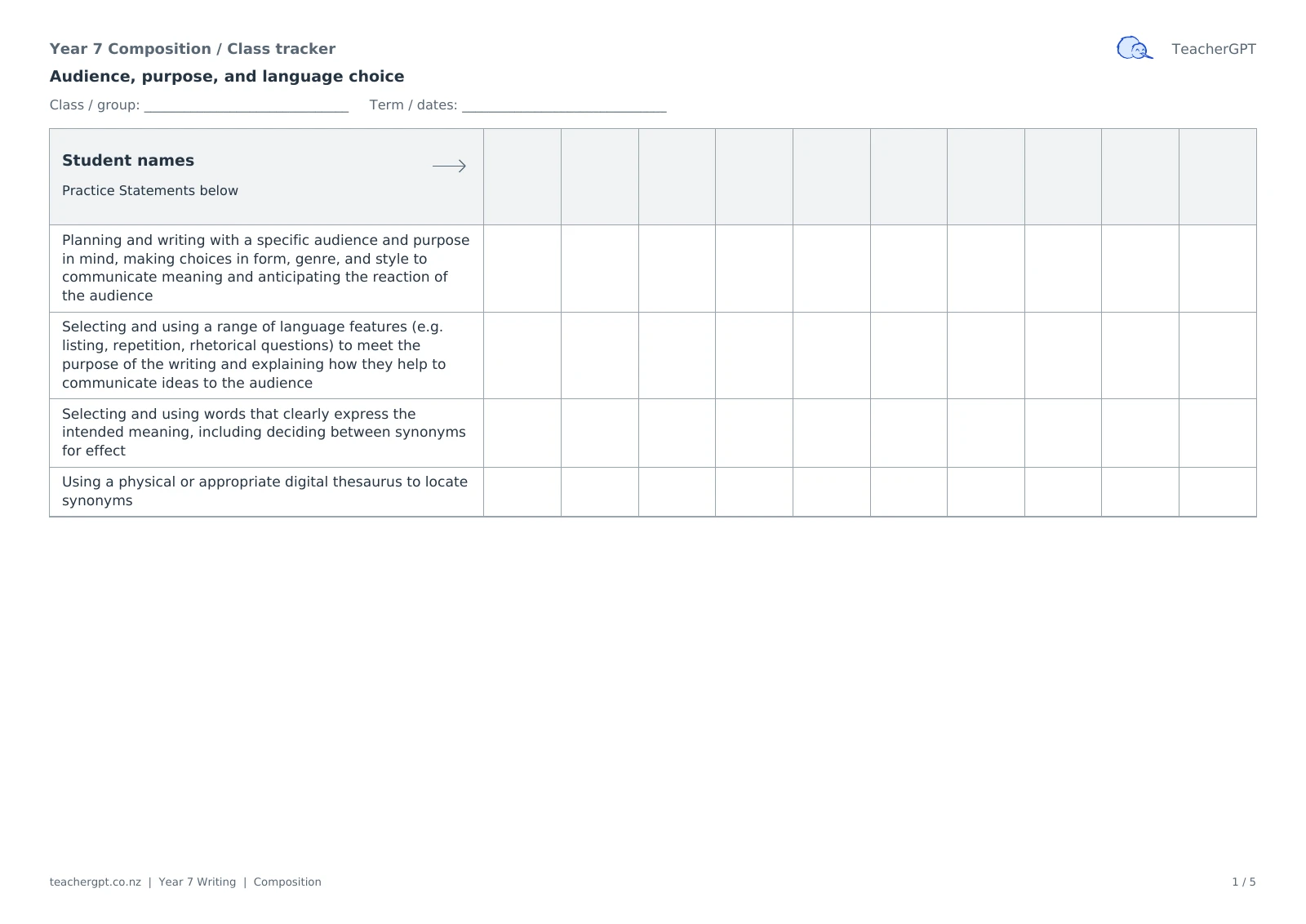
Audience, purpose, and language choice
Planning and writing with a specific audience and purpose in mind, making choices in form, genre, and style to communicate meaning and anticipating the reaction of the audience
Selecting and using a range of language features (e.g. listing, repetition, rhetorical questions) to meet the purpose of the writing and explaining how they help to communicate ideas to the audience
Selecting and using words that clearly express the intended meaning, including deciding between synonyms for effect
Using a physical or appropriate digital thesaurus to locate synonyms
Sentence structures, grammar, and punctuation
Writing complex sentences with relative or adjective clauses
Using their understanding of different sentence structures to craft sentences that effectively communicate ideas, using complex sentences with adjectival or relative clauses to illustrate the connections between ideas
Crafting sentences that communicate meaning clearly, correctly using: abstract nouns; verb tenses; adverbial phrases
Distinguishing between active and passive voice and making deliberate choices about which to use when writing
Using colons for introducing a list after a complete sentence (e.g. 'The recipe calls for several ingredients: flour, sugar, eggs, and butter')
Using colons for introducing explanations or examples (e.g. 'There was only one thing left to do: finish the project')
Using semicolons to separate two independent clauses (e.g. 'The weather was perfect for a hike; the sun was shining and the sky was clear')
Writing to entertain
Writing texts to entertain that present real or imagined experiences or events
Writing texts to entertain that introduce a situation and setting that help the reader, listener, or viewer understand what is happening and where
Writing texts to entertain that are well structured, using paragraphs, stanzas, or scenes to create a sense of sequence
Writing texts to entertain that include carefully selected words and phrases, relevant descriptive details, and sensory language to convey experiences and events
Writing texts to entertain that provide a resolution or sense of closure that follows from the rest of the text
Writing to inform
Writing texts to inform that clearly introduce the topic and organise ideas and information logically into paragraphs
Writing texts to inform that include headings and visual features such as illustrations, charts, tables, and multimedia (when useful for aiding comprehension)
Writing texts to inform that include words and phrases to clarify, illustrate, or compare ideas
Writing texts to inform that include relevant facts, definitions, examples, and quotations
Writing texts to inform that provide references for the sources of information used in the text
Writing texts to inform that include precise language and domain-specific vocabulary to explain the topic
Writing texts to inform that provide a concluding paragraph which highlights the most important points
Considering whether a digital or media text is trustworthy by considering who created it, what evidence it presents, and how the information is supported or sourced
Using digital content responsibly by citing sources and, where appropriate, asking permission before sharing
Writing to persuade
Writing texts to persuade that introduce a preferred position and organise the reasons and evidence clearly
Writing texts to persuade that support the stated position with clear reasons and relevant evidence, using trustworthy sources
Writing texts to persuade that include emotive language that is compelling but respectful
Writing texts to persuade that have a concluding section that clearly restates their position
Transcription Skills
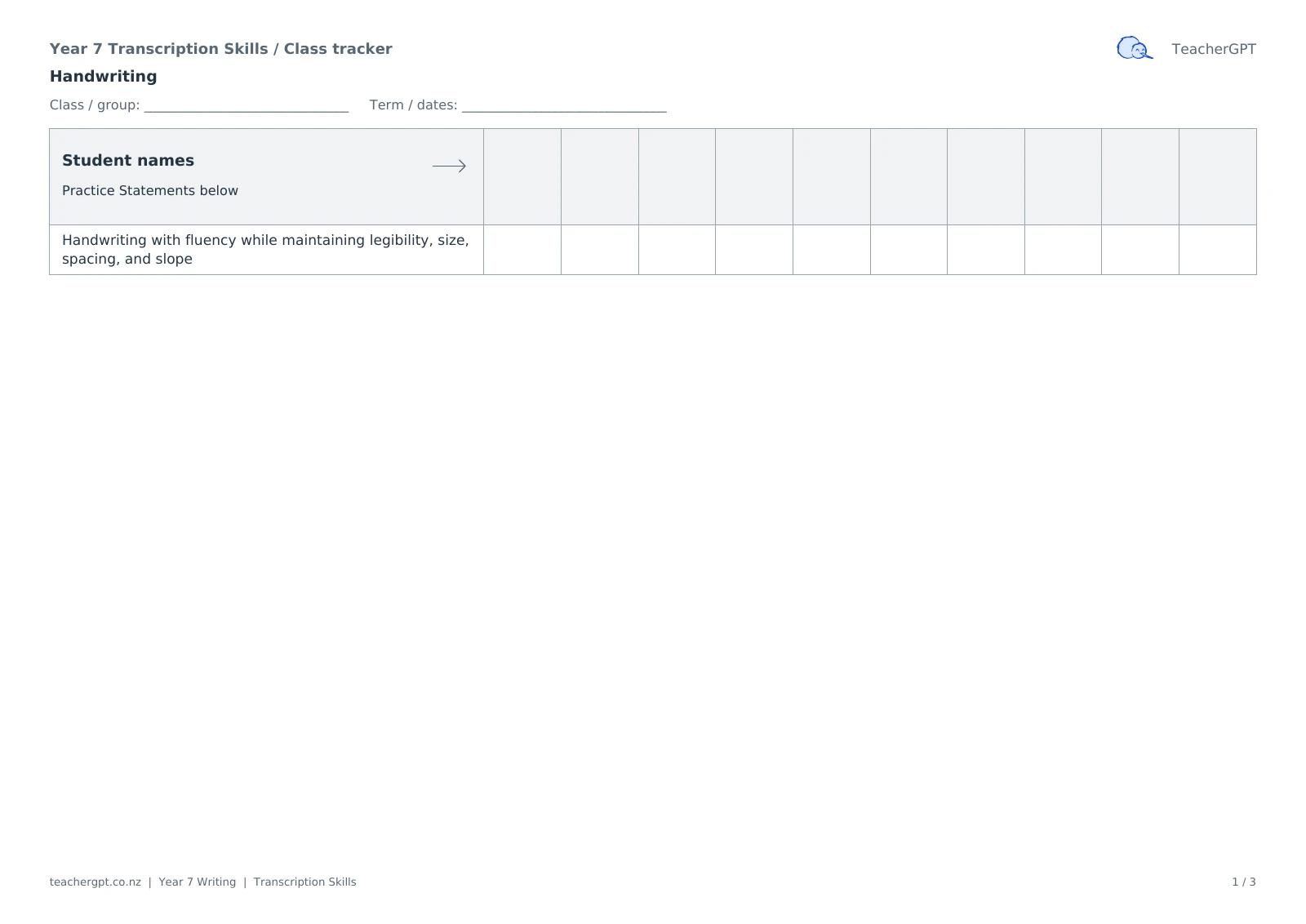
Handwriting
Handwriting with fluency while maintaining legibility, size, spacing, and slope
Keyboarding
Using efficient keyboarding with fluency and accuracy
Spelling
Spelling words with ambiguous vowel spelling including: <ei> representing /long a/ (e.g. 'reign') or /long e/ (e.g. 'ceiling'); 'ou' representing short /u/ (e.g. 'enough'); 'a' representing /o/ (e.g. following 'w' as in 'was' and 'qu' as in 'quad')
Spelling words with ambiguous consonant spellings, including <gh> representing /f/ (e.g. 'enough') and <ch> representing /ch/, /sh/, or /k/
Spelling words with less common silent letters: <gn> = /n/, <gh> = /g/, <ps> = /s/, <pn> = /n/, <mn> = /m/, <rh> = /r/, and <pt> = /t/
Spelling words with two-syllable prefixes (e.g. 'inter–', 'over–', 'circum–', 'contra–', 'ambi–', 'ante–', 'anti–')
Spelling words with suffixes '–able', '–ible', and '–ure'
Writing processes
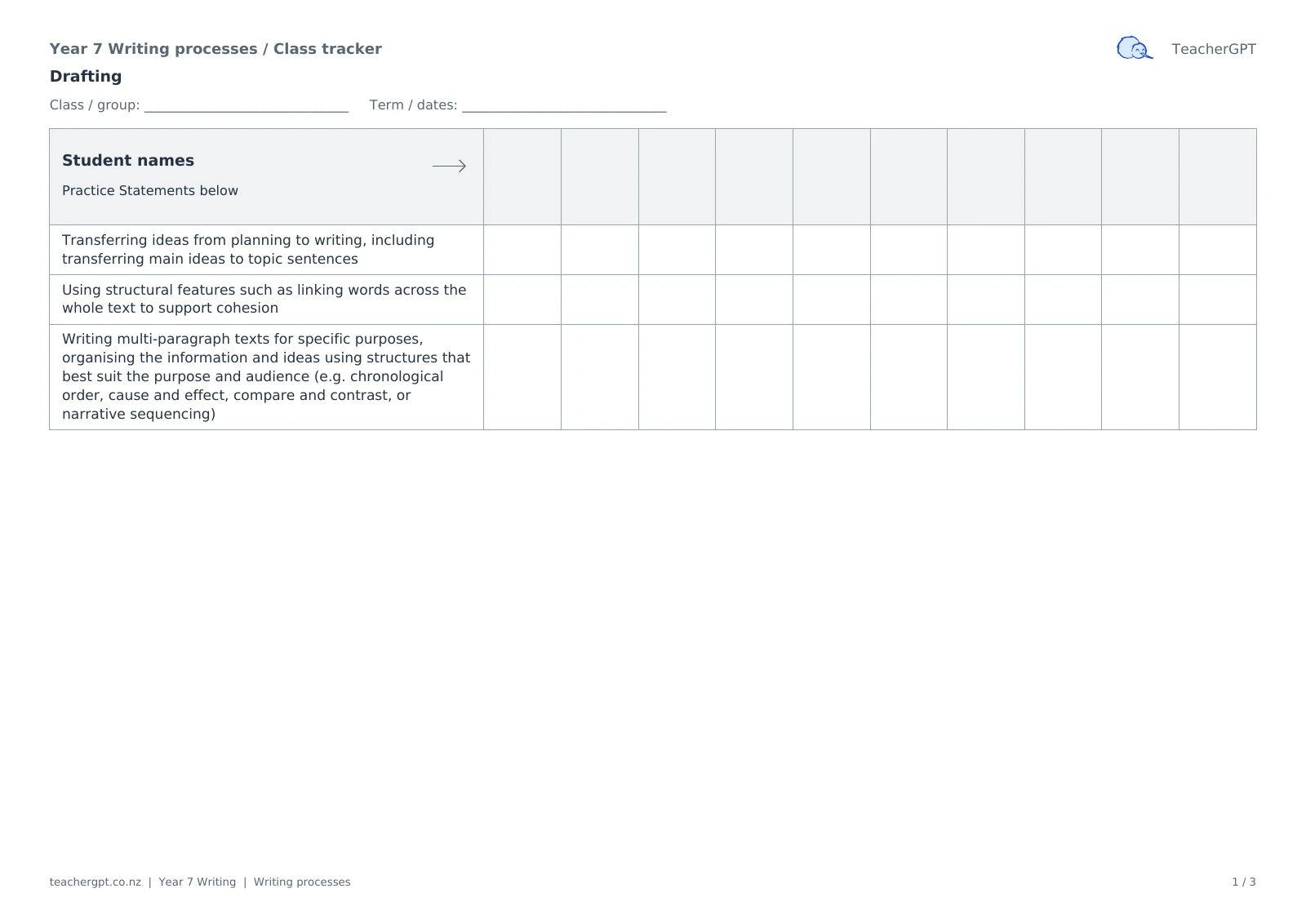
Drafting
Transferring ideas from planning to writing, including transferring main ideas to topic sentences
Using structural features such as linking words across the whole text to support cohesion
Writing multi-paragraph texts for specific purposes, organising the information and ideas using structures that best suit the purpose and audience (e.g. chronological order, cause and effect, compare and contrast, or narrative sequencing)
Planning
Using appropriate planning and note-taking strategies for specific writing tasks
Taking notes using key words and phrases to support idea development
Organising ideas logically into paragraphs, sections, or stanzas
Setting, working towards, and self-evaluating against specific writing goals based on analysis of writing content and processes
Revising and editing
Making revisions to the content, style, features, and tone of draft texts and adding, deleting, and re-sequencing words and sentences to improve clarity, focus, grammar, and coherence for the intended audience and purpose
Requesting and selectively using peer feedback to determine where revision is needed, justifying their decision when the feedback is not used
Editing draft texts, checking for errors in spelling, punctuation, and formatting