A simple tracker for your class. Practice Statements down the left, ten student-name spaces across the top, and blank cells to use your way.
Choose a strand below. Write in the names, then add your own ticks, dates, codes or notes. For a class of 25, print three copies of the tracker.
28 Practice Statements · 3 strands · PDF and Google Sheets · No TeacherGPT signup needed
Choose a tracker by strand
Each preview shows the first page of that PDF. Longer strands continue over several pages, with space for the same ten names on every page.
Prefer to work online? Choose Copy to Google Sheets to make your own editable copy in your Google account. The original is view-only. Add student names and notes to your own copy, and add more student columns if needed.
In Composition, Transcription Skills and Writing processes, each curriculum subcategory starts on a new page within its strand PDF. Longer subcategories continue under the same heading.
Composition
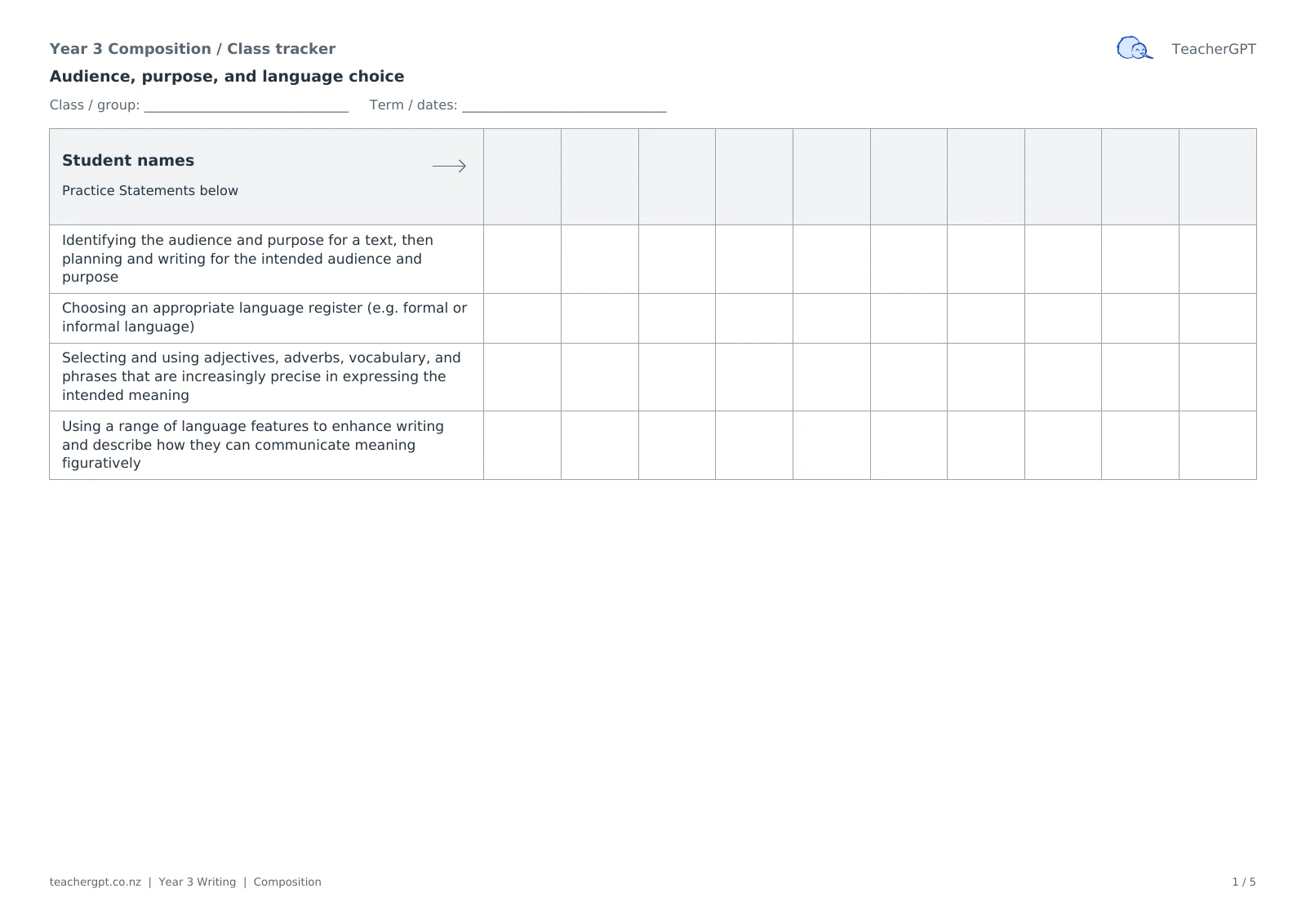
11 Practice Statements · 5 pages · 10 student columns
These trackers cover all 28 stored Year 3 Writing Practice Statements, organised into their curriculum strands and skill groups.
Composition
Audience, purpose, and language choice
Identifying the audience and purpose for a text, then planning and writing for the intended audience and purpose
Choosing an appropriate language register (e.g. formal or informal language)
Selecting and using adjectives, adverbs, vocabulary, and phrases that are increasingly precise in expressing the intended meaning
Using a range of language features to enhance writing and describe how they can communicate meaning figuratively
Sentence structures, grammar, and punctuation
Combining two simple sentences orally, using a subordinating conjunction, to form a complex sentence
Using complex sentences with subordinating conjunctions in writing
Using capital letters, full stops, question marks, and exclamation marks correctly
Using commas for lists
Writing to entertain
Writing a narrative in which they recount a well-elaborated event or short sequence of events, including details to describe setting, actions, thoughts, and feelings, and providing a sense of closure
Writing to inform
Writing a paragraph about a topic that includes a topic sentence, supporting details, and a concluding sentence
Writing to persuade
Writing a paragraph that states an opinion about a topic, gives some supporting reasons for their opinion, and provides a concluding statement
Transcription Skills
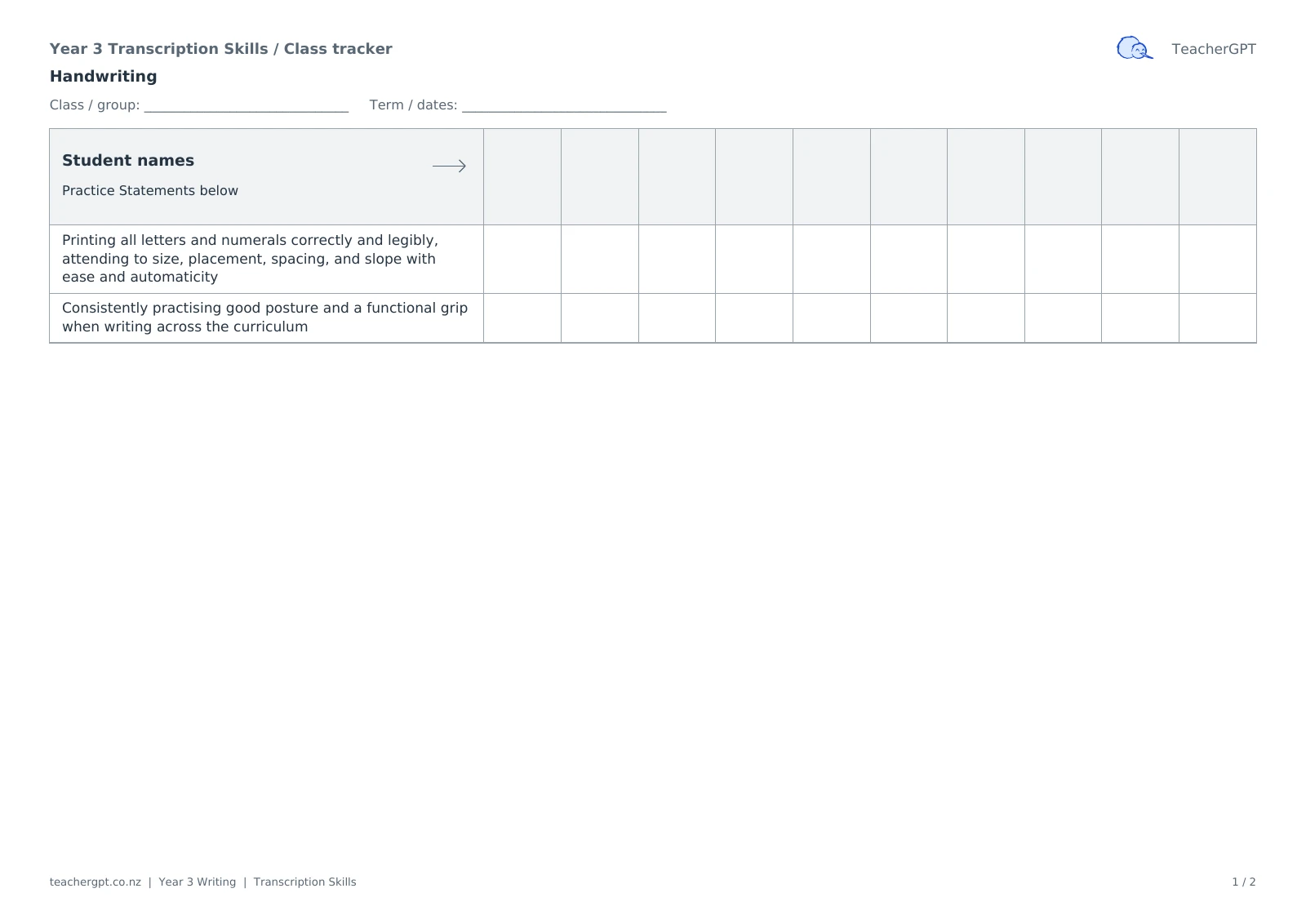
Handwriting
Printing all letters and numerals correctly and legibly, attending to size, placement, spacing, and slope with ease and automaticity
Consistently practising good posture and a functional grip when writing across the curriculum
Spelling
Orally segmenting multi-syllable words into syllables, then segmenting syllables into phonemes for spelling
Spelling words with the vowel patterns: <a_e>, <ai>, and <ay> representing /long a/; <e_e> representing /long e/; <i_e> representing /long i/; <o_e> representing /long o/; <u_e> representing /long u/; <ou> and <ow> representing /ow/; <oo> as in 'good'; <oy> and <oi> as in 'coin' and 'toy'; <ee> and <ea> representing /long e/; <oa> and <ow> representing /long o/
Spelling words with r-controlled vowels represented by <ar>, <or>, <er>, <ir>, and <ur>
Spelling the most commonly used irregular words containing less typical phoneme–grapheme correspondences
Adding less-common suffixes (–er, –ly) and applying simple spelling conventions
Spelling easier contractions for two-word phrases
Writing processes
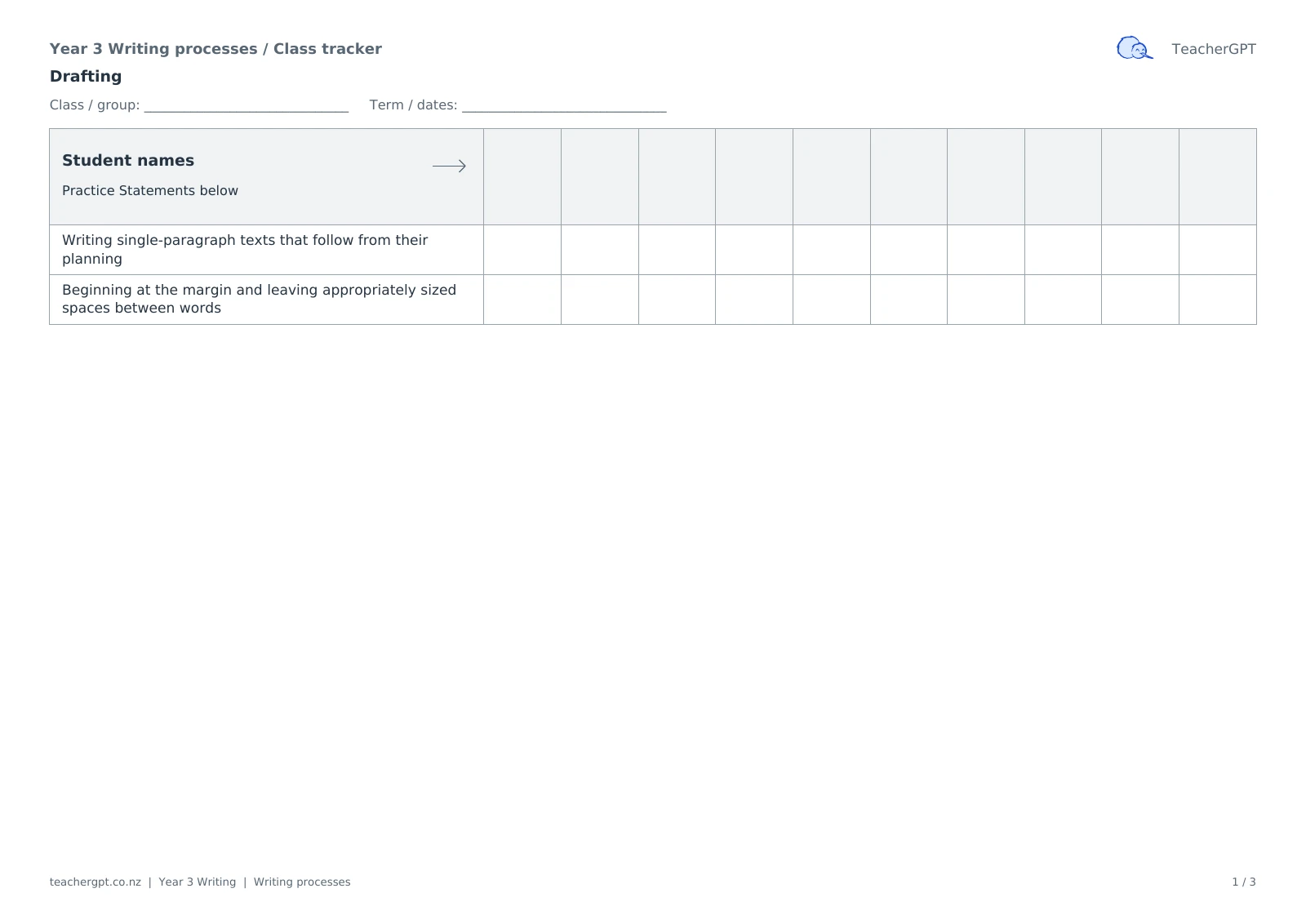
Drafting
Writing single-paragraph texts that follow from their planning
Beginning at the margin and leaving appropriately sized spaces between words
Planning
Using simple organisers to plan single-paragraph texts
Using notes to record key ideas during planning
Identifying and working towards a specific writing goal based on revisions and edits made to previous writing
Revising and editing
Rereading to check each sentence and making corrections when something does not make sense or is ungrammatical
Adding, deleting, or substituting words to clarify meaning
Improving sentence construction by separating run-on sentences and/or combining consecutive sentences
Making simple edits to draft sentences using known spelling patterns and punctuation